D-101
Poured Concrete Driveways
Broom-finished or smooth concrete placed with reinforcement and control joints planned before the truck ever arrives. Done right, it is the lowest-maintenance surface you can park on.
Sheet D-100 · London, Ontario
The surface your house stands behind.
A driveway in London, Ontario gets salted, plowed, frozen, thawed, and parked on every single day. We build for that, starting with what is under the surface, not just what you see.
Get a Free Quote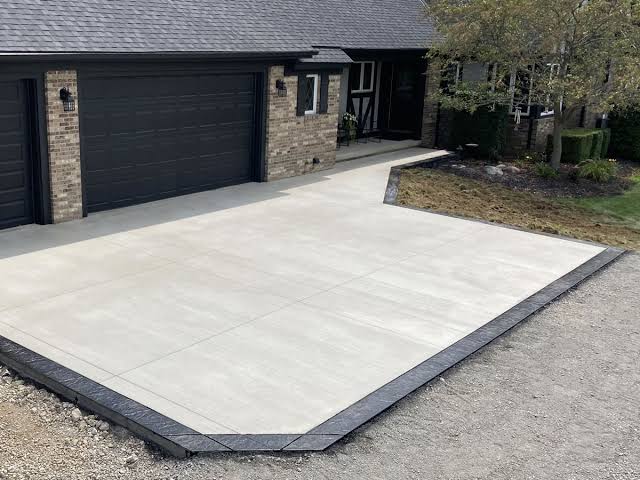
The Spec
Excavation, base, compaction, drainage. Then the surface.
Base
Compacted Granular A, commonly around 6 inches
Concrete
32 MPa, air entrained, made for freeze and thaw
Season
Roughly May through October
Sheet D-109 / Before + after
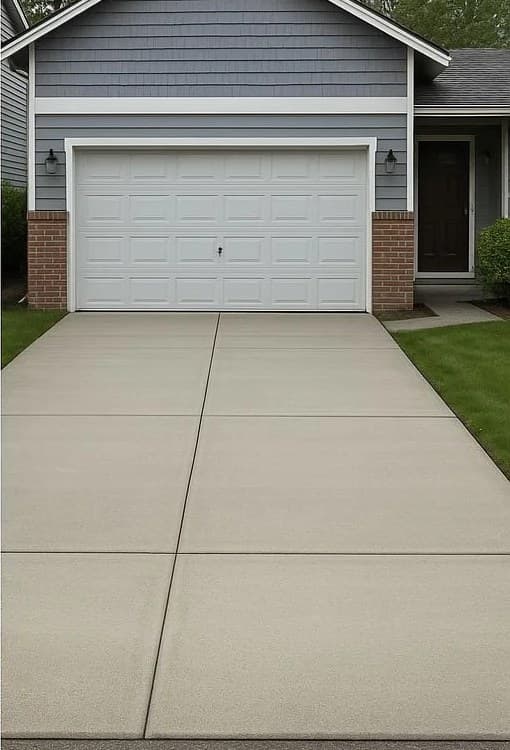
The cracked, heaved surface pulled out, a proper compacted base put in, and a clean new pour on top. Grab the handle and slide it across.
 Before After
 D-101
Broom-finished or smooth concrete placed with reinforcement and control joints planned before the truck ever arrives. Done right, it is the lowest-maintenance surface you can park on.
D-102
Concrete textured and coloured to read as stone, slate, or brick at a fraction of the material cost. Popular for front walkways, porches, and patio surrounds that need to look sharp from the curb.
D-103
Cracked, heaved, or scaling concrete taken out and repoured properly, back down to a compacted base. We tell you honestly when a surface has years left in it and when replacing it is the only fix worth paying for.
D-104
Front walks, garden paths, step landings, and driveway borders that tie the whole approach to the house together. Small footprint, big first impression.
D-105
Garage and shed pads, patios, equipment pads, and the everyday flatwork around a property. Same base preparation and jointing as a driveway, on a smaller footprint.
D-106
The part you never see and always feel. We slope surfaces away from foundations, sort out pooling water, and set the base so spring melt drains instead of heaving your new driveway.
Why the base matters
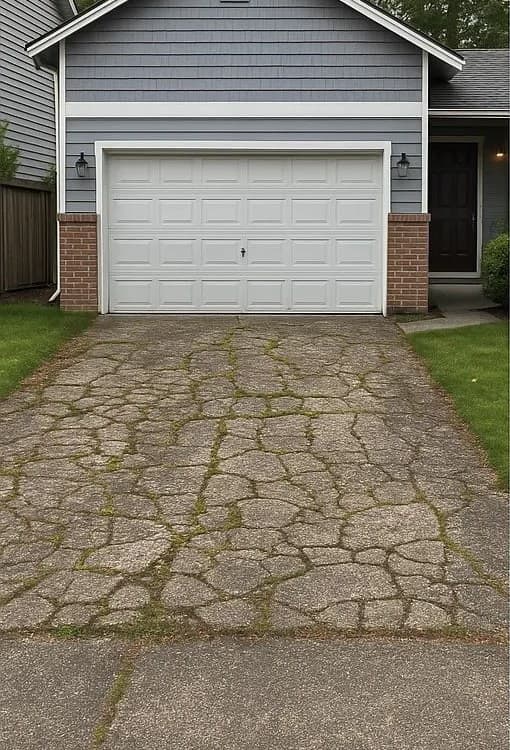
When water gets under a driveway and freezes, it expands and lifts whatever sits above it. That is why slabs crack, edges heave, and surfaces map out in spiderwebs.
The fix is not a thicker top layer. It is honest excavation, the right granular base, compaction in lifts, and slopes that move water away from the surface and the foundation.
That work disappears the day we pour or lay the finish. It is also the reason the finish still looks right years later. We quote it, we show it to you at the site visit, and we do not skip it.
Sheet D-110 / The sequence
01
The old surface comes out and we dig down to solid ground. Most driveway failures trace back to skipping this step.
02
Crushed stone goes in and gets compacted in lifts, sloped so water drains away instead of sitting under your driveway.
03
Forms set, reinforcement placed, then the pour, finished clean against lawns, walks, and the garage slab.
04
Concrete gets cured properly and jointed so cracking is controlled, and the site gets swept before we call it done.
Sheet D-107 / Plan your project
Punch in your dimensions for a rough idea of the base stone, concrete, and reinforcement a job like yours takes. It is a planning tool, not a quote. When you are ready, we come measure and put real numbers on paper.
Sheet D-108 / Straight answers
The short versions, from the bylaws and the building science. The long version, with your measurements, comes with the free site visit.
Replacing a driveway like for like usually needs no permit. Widening it, adding a new one, or changing the curb cut touches the City road allowance, which needs City approval under the Streets By-law, and the City does the actual curb work. We confirm what applies to your property at the site visit.
Excavation down to solid ground, then a compacted crushed stone base, commonly around 6 inches of Granular A for a residential driveway and deeper over soft ground, then the finished surface. The base does the real work: it spreads the load and drains water so freeze and thaw cannot heave the surface.
Exterior concrete here should be 32 MPa, air entrained, the CSA exposure class made for freeze thaw plus road salt, placed on a proper base, cured correctly, and jointed so cracking is controlled. Skipping the air entrainment or the curing is why some driveways scale and flake after a winter or two.
The City caps residential driveway width relative to your lot frontage, with a minimum around 2.7 metres. If you want to widen, we check your lot against the bylaw before quoting so you never build something the City can make you remove.
The main season runs roughly May through October. Cold weather pours are possible with protection and heat, but they cost more and carry more risk, so late fall projects are often best booked for the first warm window of spring. Booking ahead of the season gets you the earliest slot.
In St. Thomas or Elgin County? Same crew, same spec: see our St. Thomas concrete page.